Torque/Angle Sensors
Accurate Steering Input Detection for Smarter, Safer Driving
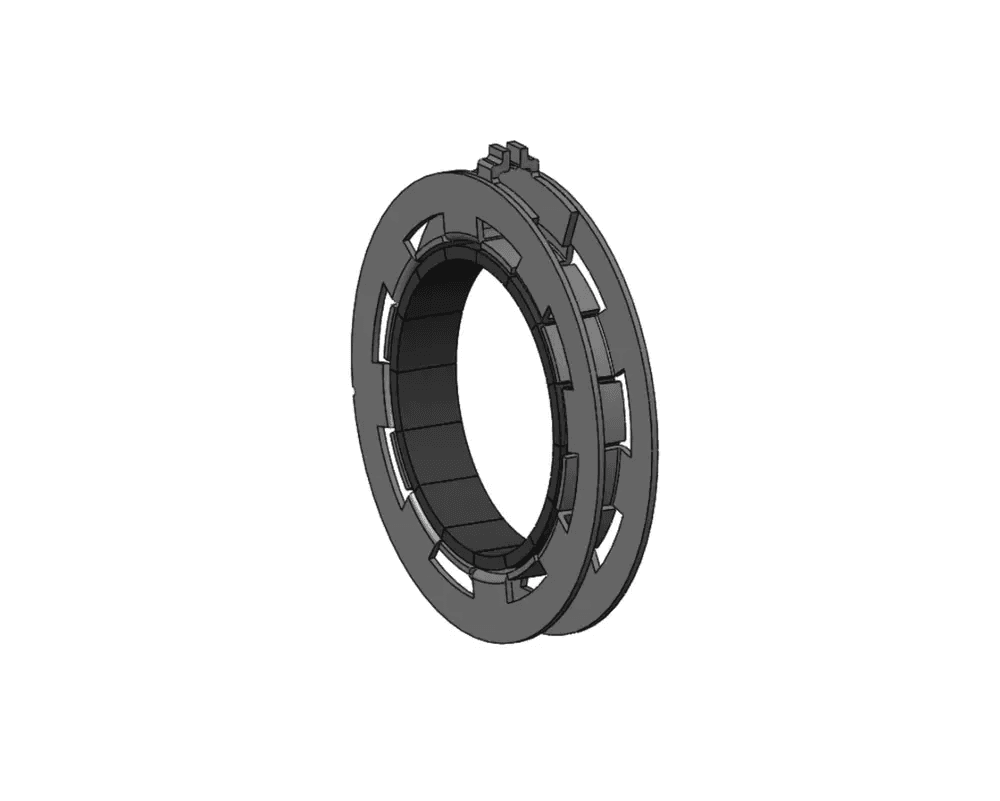

Delivering accurate detection of steering wheel torque and position for next-gen Electronic Power Steering (EPS) systems.
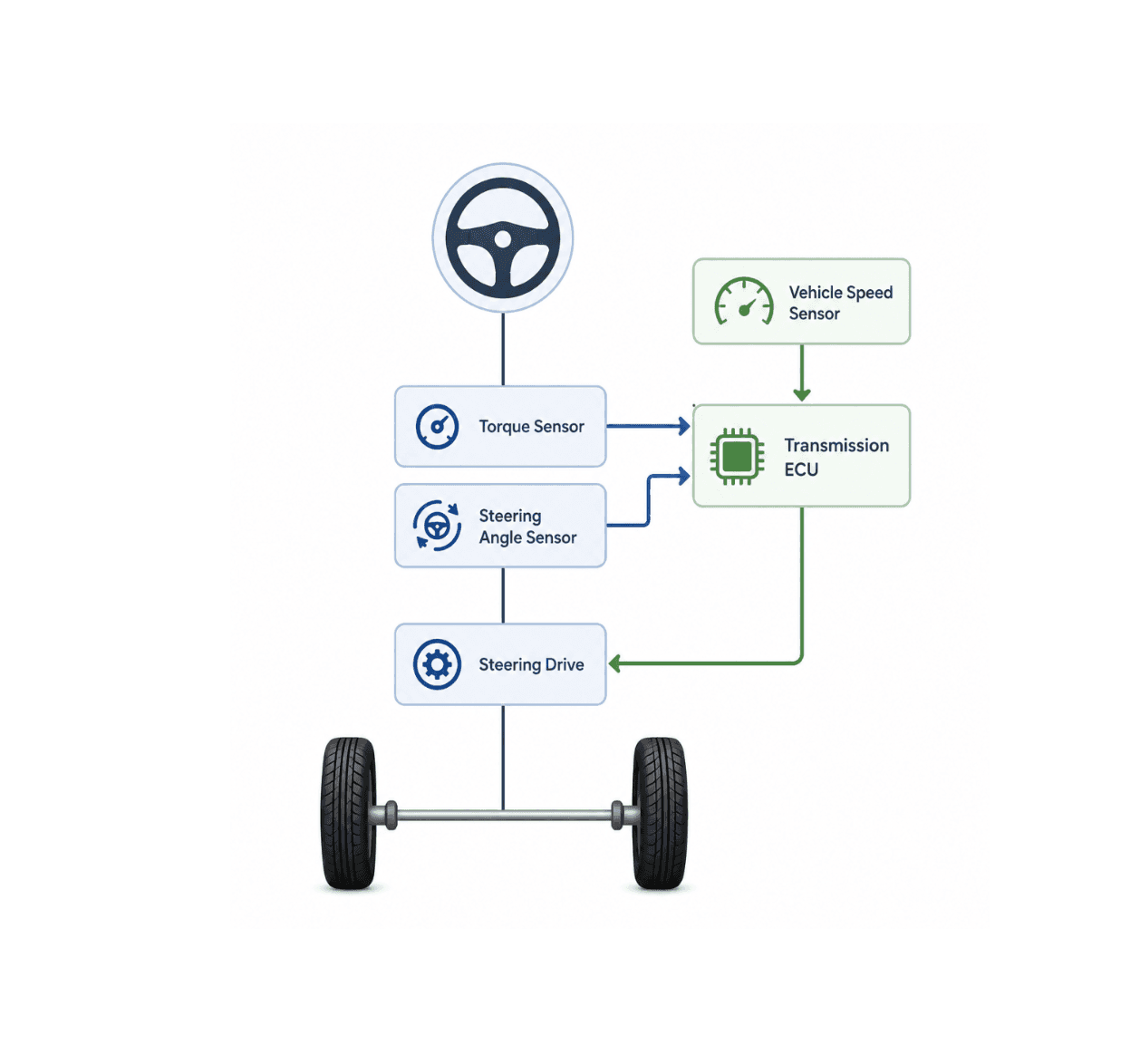
Modern EPAS (Electric Power Assisted Steering) systems rely on torque and angle sensors to accurately measure the driver’s input. These sensors capture the steering wheel's position and the torque applied, sending signals to the Transmission ECU to adjust assistance accordingly. The result: reduced steering effort and enhanced driving control.
How it Works: High-Precision Magnetic Sensing in Motion
1
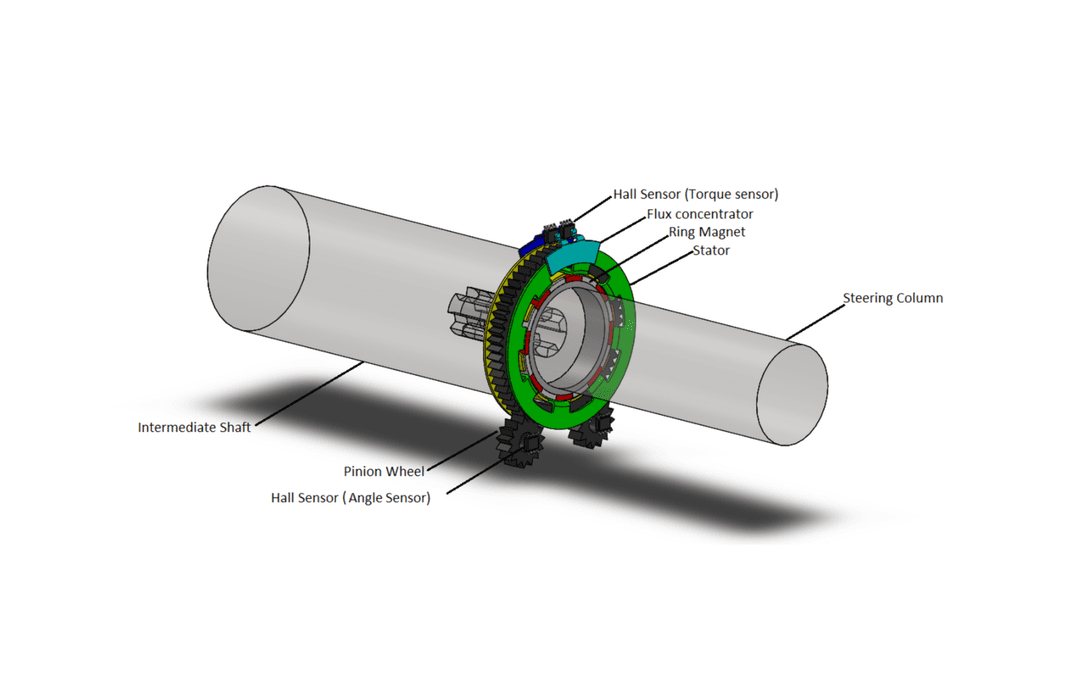
Mounted on the rotary shaft of the steering column, this rotor consists of a series of permanent magnets positioned on a ferromagnetic yoke. It generates the magnetic field required for sensing.
2
A soft magnetic core placed on a corresponding shaft of the steering column. Made using high-performance 48% Ni-Fe alloys for magnetic efficiency.
3
Constructed using 80% Ni-Fe alloy, this component channels magnetic flux to the Hall sensor—ensuring sharp responsiveness and accurate signal conversion.
4
Detects variations in magnetic field strength to precisely calculate torque and angular position.
5
The system feeds this data to the ECU, which drives the power steering motor with optimal torque assistance.
Feature | EPAS | Hydraulic Steering |
|---|---|---|
Fuel Efficiency | No fuel required | Continuous fuel draw |
Weight | Lightweight | Heavier system |
Fail-Safety | Electronics-based | Mechanical dependencies |
Measurement Accuracy | Integrated magnetic sensing | Limited analog feedback |
Control Precision | ECU-controlled | Less responsive |
1
No hydraulic pump required—lower energy consumption.
2
Magnetic sensing assemblies provide accurate torque and angle data.
3
Ideal for modern vehicle platforms prioritizing efficiency.
4
Electronically driven systems offer improved reliability.
5
No fluids, fewer emissions, and lower power consumption.
Pioneering cutting-edge technology to develop reliable, high-performance magnetic components and engineering solutions.