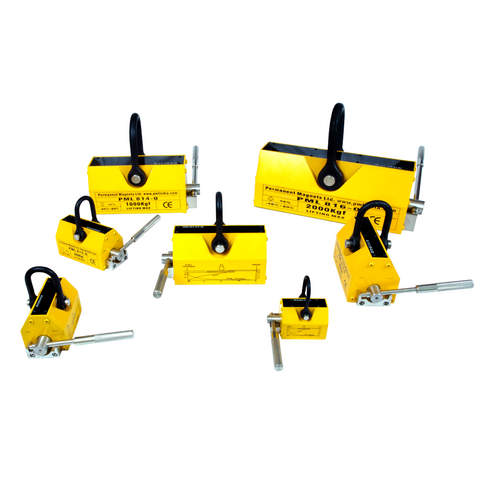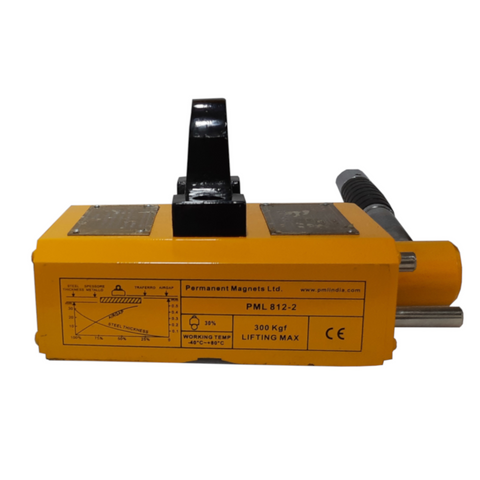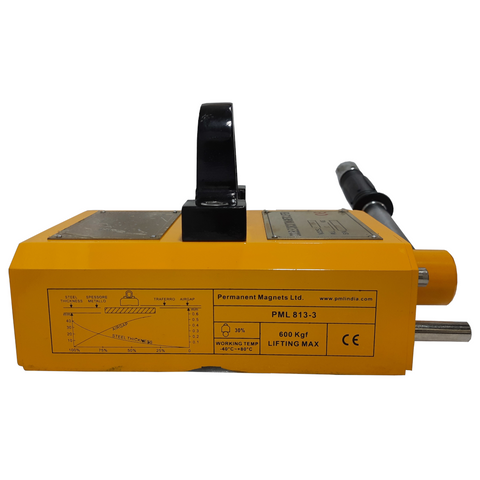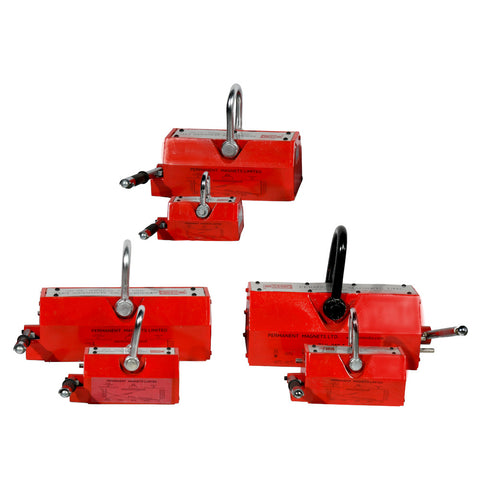
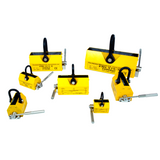
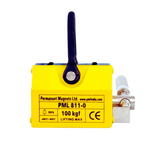
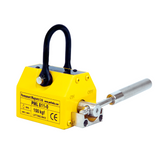
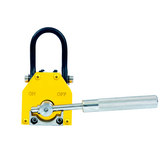
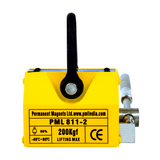
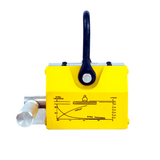
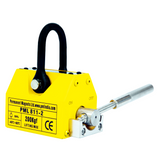
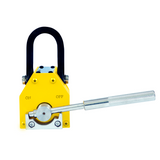
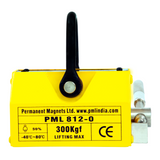
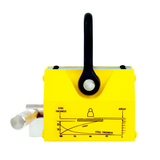
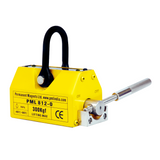
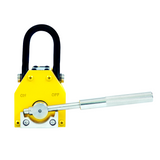
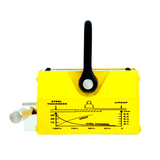
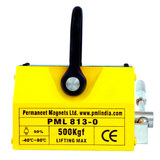
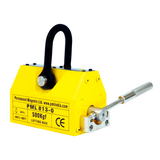
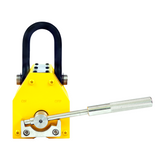
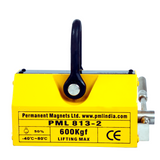
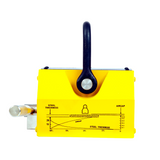
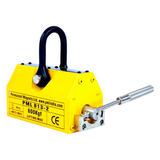
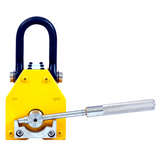
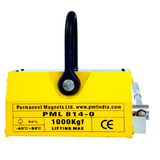
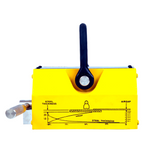
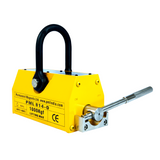
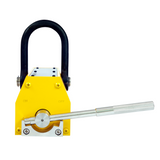
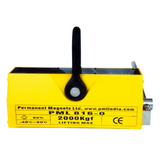
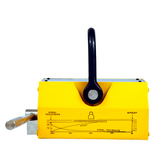
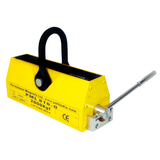
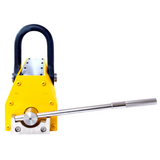
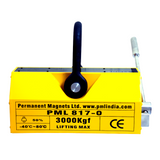
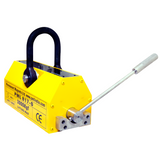
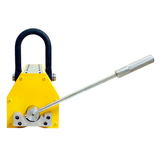
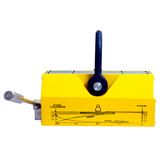
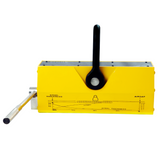
Magnetic Lifters 3 times FOS
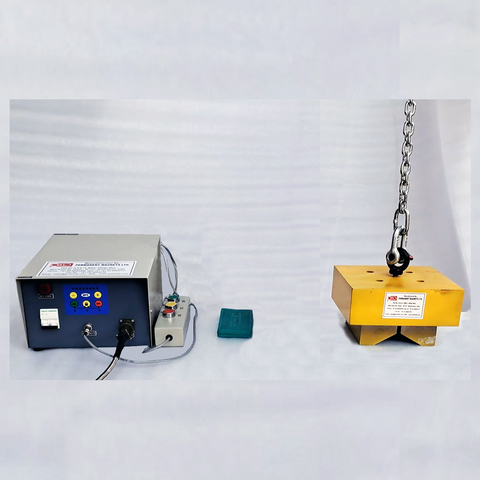
Available
Where to use Magnetic Lifter?
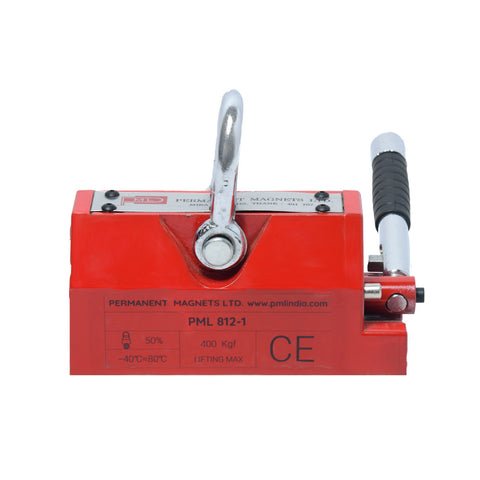
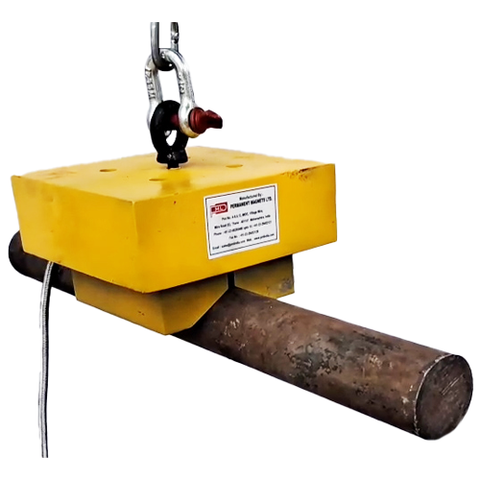
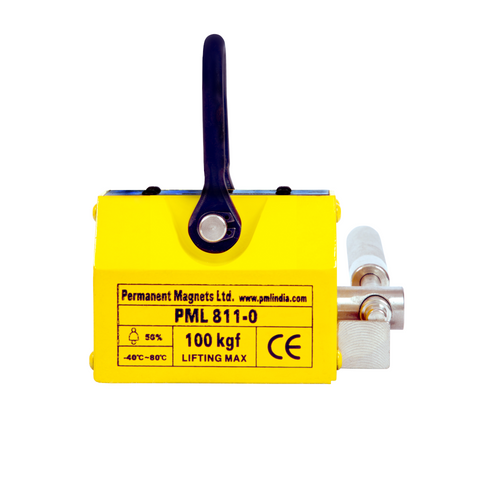
Permanent Magnetic Lifters are mainly used to lift steel plates, blocks, press molds, etc. and load / unload in machines during handling operation. They can hoist moving iron blocks and other magnetic material. They are easy to operate and safe to handle and hence are widely used as lifting devices in factories, docks, warehouses, and transportation industries. By using them, you can improve your working conditions and increase your working efficiency.
Magnetic lifters available models:
PML's range of Lifting Devices ranges from 100kg to 3-ton lifting capacity.
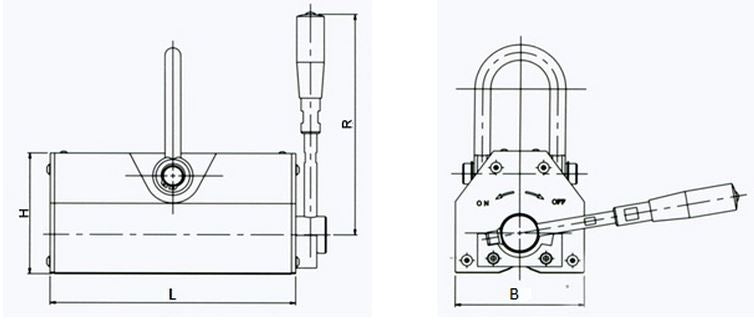

| Permanent Magnetic Lifters Model | ||||||||||||
|---|---|---|---|---|---|---|---|---|---|---|---|---|
| Model No. |
Rated Lifting Capacity (Kg) | Cylindrical Lifting Capacity (Kg) |
Max. |
Max Operating Temp (ᵒC) | L (mm) |
B (mm) |
H (mm) |
Self Weight (Kg) | Minimum Plate Thickness Requires (mm) | Job Size Range | ||
| L | W | (Ø) | ||||||||||
| 811-0 | 100 | 45 | 300 | 80 | 89 | 64 | 69 | 3 | >4 | 1200 | 800 | 40-100 |
| 811-2 | 200 | 90 | 600 | 80 | 117 | 82 | 90 | 6 | >6 | 1200 | 800 | 40-100 |
| 812-0 | 300 | 125 | 900 | 80 | 150 | 81 | 91 | 7 | >8 | 2000 | 1200 | 40-160 |
| 813-0 | 500 | 225 | 1500 | 80 | 175 | 104 | 121 | 14 | >12 | 2500 | 1500 | 40-200 |
| 813-2 | 600 | 300 | 1800 | 80 | 209 | 102 | 120 | 23 | >15 | 2500 | 2000 | 50-300 |
| 814-0 | 1000 | 450 | 3000 | 80 | 275 | 132 | 140 | 37 | >25 | 3000 | 2000 | 60-350 |
| 816-0 | 2000 | 900 | 6000 | 80 | 426 | 150 | 170 | 73 | >40 | 3500 | 2000 | 80-400 |
| 817-0 | 3000 | 1350 | 9000 | 80 | 487 | 210 | 225 | 151 | >60 | 3500 | 2000 | 80-400 |


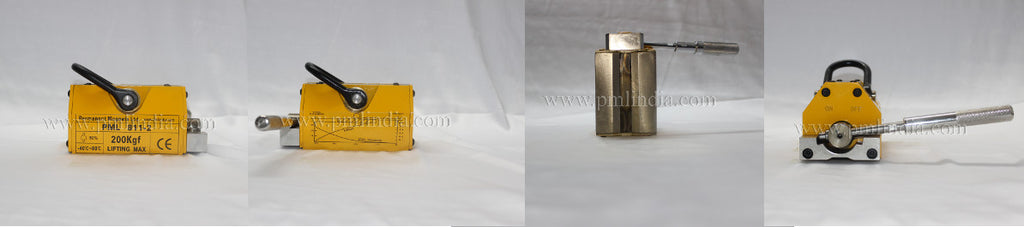
Do's and Don'ts for Lifter positioning


Features:
- Zero electricity required
- Forged hook for high mechanical strength and durability
- Precision machined assembly block in a single piece to enhance efficiency
- Designed for safety and lightweight
- Full proof locking system with an easy to use "on" and "off" lever
- 3 times rated capacity factor of safety to meet the safety standards as per international standards for under the hook devices
- Test certificate for safety factor from government-approved third party
- No Maintenance and Operating cost
- No damage to the workpiece being lifted
- Very Compact
Benefits:
- Lifting Magnets use space more effectively. Eliminates the need to gauge and increase stacking height
- As less as one operator can move large and heavy work-piece safely and easily using Magnetic Lifters
- Lifting Magnets save labor and time - improves productivity
Construction:
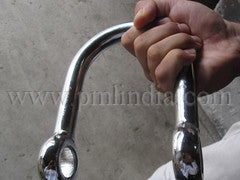
Permanent Magnet Lifters have a strong magnetic field path produced by NdFeB magnetic materials. "On" and "Off" of the magnetic path is controlled by turning the lever manually. There are shackles on the top of Magnetic Lifter for lifting.
Operating Instructions
- The workpiece surface (magnetic ferrous surface) and the magnet pole surface must be clean and smooth to achieve maximum efficiency. Ground and machined surface are ideal but a good clean surface on a ferrous or casting is acceptable provided a sufficiently flat area available for a good magnetic contract with the workpiece
- There should be no air gap/inclusions between the magnet pole and the job surface
- Place the magnet on the ferrous surface. Unlock the lever by pulling it out and then turn it to the “ON“ position. Once it is made “ON”, lock it by releasing it. For making it “OFF”, please follow the similar procedure. (Do not place on wooden surface OR non-magnetic surface - it will not be possible to operate Lever to “ON” position)
- Move the load smoothly, avoid shocks and collisions
- To place/drop the lifted material, operate the lever to the “OFF” position
When not in use:
- Apply Grease / Oil on Magnetic Poles surface to prevent it from rusting and
- Place it on a thick wooden plank to safeguard its Magnetic poles from any damages, scratches, etc.
Safety Instructions:
- Place the magnet on the Ferrous Surface in the “OFF” position and then make it “ON”. Do not make it ON without keeping it on a ferrous surface
- The magnet is to be placed on the center, i.e. centering to the center of gravity of the load and then lift
- While handling the load, no person should be allowed in the immediate danger zone
- Ensure that the lever is made “OFF” after resting the load at the desired place in the balance position
Important Factors for the Safe Operation of Lifting Devices:
Load characteristics other than just weight must be considered in order to determine the weight that any magnetic lifter can lift. This statement is true for any lifting magnets because they all operate on the same fundamental laws of Physics. Magnetic power is pictured as lines of force flowing from North to the South Pole. Anything that limits the flow of these magnetic lines of force obviously reduces the magnet’s lifting ability. There are four important factors that limit the flow of these lines of force.
Load Surface Conditions
Magnetic lines of force do not flow easily through the air, they need iron in order to flow freely. Therefore, anything that creates an air gap between a magnet and the load, limits the flow of magnetic force and thus reduces the lifting capacity of a magnet. Paper, dirt, rust, paint and scale act in the same way as air, so also a rough surface finish between the magnet and the load.
Load Length and Width
When the length or width of a load increases, it ceases to lie flat and the load begins to drop at the edges. The drooping/sagging of the load can create an air gap between the load and the magnet. If this occurs then the lifting capacity of the magnet is reduced.
Load Thickness
Magnetic lines of force are more effective when they flow through iron instead of air. The thicker the load, the more the lines of magnetic force. After a certain thickness of load, no more lines of force will flow because the magnet has reached its full capacity. Thin material (load) means less iron available and thus fewer lines of magnetic force flow from the magnet into the load. Therefore, the lifting ability of the magnet is reduced. Every magnet is rated for minimum thickness of load to reach full lifting capacity. Below such thickness of load will berate the lifting capacity of the magnet. In general, it can be said the load must be thicker than the width of one of the magnet poles.
Load Alloy
Low carbon steels, such as soft Iron or Mild Steel are nearly as good conductors of magnetic lines of force as pure iron. However, if the alloys contain nonmagnetic materials, they decrease the ability of magnetic lines of force to flow into the load. An alloy such as ANSI304 of Stainless steel is an almost as poor conductor of magnetic force as air.
| This table provides reduction factors for material other than AISI 1020 Steel | |
| Reduction factors for materials other than AISI 1020 steel | |
| Materials | Reduction Factors |
| Cast Steel | 0.90 |
| 3% Silicon Steel | 0.80 |
| AISI 1995 Steel | 0.70 |
| 416 Stainless Steel | 0.50 |
| Cast Iron (Non-chilled) | 0.45 |
| Pure Nickel | 0.10 |
Why PML’s Permanent Magnetic Lifters?
- These magnetic Lifters are ruggedly built
- High Lifting Capacity with respect to size & weight
- Works without Electrical Power
- No maintenance and operational costs
- Very easy to use - Save time & energy
- Made with high energy rare earth magnets (NdFeB)
- Mechanical Switching by turning a lever with a lock
- The system against switching off accidentally
- No damage to the workpiece being lifted
- Easily transportable
- Reliable
Videos of Magnetic Lifters
FAQ for Magnetic Lifter
- 1) Can PML lifter be used for lifting thinner and Lengthy sheets
- Ans - No. For thin and lengthy sheets, use of multiple lifters required to avoid sagging effect.
- 2) Can heavy parts be lifted with placement of Lifter on flat portion.
- Ans - Yes. But the Lifter to be placed/positioned at the geometrical center of components for safe operation.
- 3) Can PML lifter be used for plate thickness 1 to 3mm
- Ans - No. PML lifters can be used for plate thickness 4mm and above.
- 4) Larger sheets can be lifted with PML Lifter.
- Ans - Sheet Length 7mtr x Width 2.5 and above shall require Multiple Lifter with Speader type attachment
- 5) How come PML Lifter cannot lift MS plate with thickness less 4mm.
- Ans - PML is using higher Grade Magnets to ensure it rated capacity and also 3 times the rated capacity. Due to this, minimum thickness specification for MS plate is specified for every Lifter and Lifter will be not be able to operate for lower thickness than specified.
- 6) What type of spares are available?
- Ans - On/Off Lever, bracket spares are available.
- 7) Do you provide calibration services for lifter?
- Ans - Yes. We do calibrate PML supplied lifters only.
- 8) Whether Cylinders and cylindrical object can be lifted.
- Ans - Yes, but with 50%rated capacity only. Further width of the lifter should be covering the object and also for Lengthy dimensions -use of Multiple lifter with spreader beam is suggested.
- 9) Do you repair magnetic lifter?
- Ans - Yes. Only PML supplied lifters can be repaired, if it's in repairable condition.
Our Valuable Customers for Magnetic Lifter
 |
 |
 |
 |
 |
 |
 |
 |
 |
 |
 |
 |
 |
 |
 |
 |
 |
 |
 |
 |
 |
 |
 |
 |
 |
 |
 |
 |
 |
 |
||||||
Related ItemPick the most popular products from us. May you love them!